
To maintain a light tower in a dusty environment, clean the air intake areas, inspect filters frequently, keep cooling vents clear and check electrical connections, lamps and the mast for dust buildup. Always switch off the equipment, allow hot components to cool and follow the manufacturer's maintenance instructions before cleaning. In construction, mining, roadwork and other dusty locations, regular inspection is especially important because accumulated dust can restrict airflow, increase operating temperatures, reduce lighting performance and accelerate wear.
For contractors and rental companies choosing equipment for demanding outdoor sites, maintenance access and component protection matter as much as light output. ONEW supplies mobile light tower generators for construction and industrial applications. One example is the ONEW ON2400, which features four 600W LED lamps, a hydraulic mast and a Kubota Z482 diesel engine. Its published product information specifies an IP65 rating for the LED lighting protection; this rating should not be interpreted as an IP65 rating for every component of the complete machine.
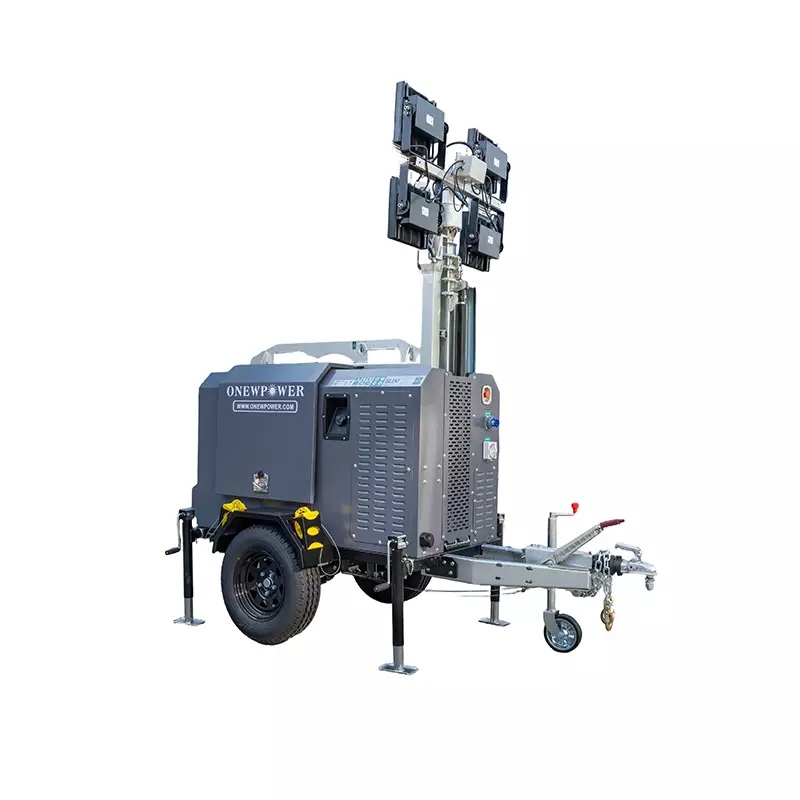
Dust may look harmless, but fine particles can enter areas where airflow, cooling and electrical protection are important. On a busy construction site, a light tower may operate near excavators, trucks, crushers and unpaved access roads. In mining and quarry environments, airborne dust can remain around equipment for long periods.
Dust buildup can cause several practical problems:
The impact depends on dust concentration, particle type, operating hours and weather. A light tower used occasionally on a clean event site will not need the same inspection frequency as a unit working every night beside a quarry or earthmoving operation.
The easiest way to protect a light tower is to make cleaning and inspection part of the normal work routine. Operators do not need complicated procedures for every check. They need a clear list of the areas that collect dust and a consistent way to report problems.
Before each shift, look at the LED lamp lenses, air intake openings, visible wiring, control panel and trailer area. Check whether dust has collected around the engine compartment or cooling vents. After operation, remove loose dirt from accessible external surfaces once the equipment is switched off and cool.
For deeper cleaning, use methods approved by the manufacturer. Avoid directing high-pressure water at electrical components, connectors, control panels or engine air intake openings. Do not use compressed air in a way that drives dust deeper into bearings, seals or electrical equipment. If a filter is damaged or heavily clogged, replace it according to the service instructions rather than trying to restore it with an unsuitable cleaning method.
The following schedule is a practical starting point for site teams. It is general maintenance guidance, not a replacement for the service intervals in the ONEW operation manual. Severe dust, long operating hours or warning indicators may require more frequent checks.
| Inspection timing | Areas to check | What to do |
|---|---|---|
| Before each shift | Lamp lenses, visible air openings, control panel, cables and trailer | Remove loose surface dust and look for damage or warning signs |
| After each shift | External housing, lamp protection glass and accessible surfaces | Clean with an approved method after shutdown and cooling |
| Regularly during dusty operation | Engine air filter, radiator and cooling openings | Inspect for restriction and service according to the engine manual |
| At scheduled service | Mast sections, hinges, fasteners, wiring and engine components | Check wear, secure connections and follow the maintenance schedule |
| Before storage or transport | Trailer, stabilisers, mast and external enclosure | Remove accumulated dirt, secure moving parts and protect the unit |
For rental fleets, recording inspection dates and operating hours helps identify units that work in unusually dusty conditions. It also gives maintenance teams a clear history when a filter, lamp or engine component needs attention.
The engine needs a steady supply of clean air. In dusty conditions, the air filter deserves particular attention because a restricted filter can affect engine performance. Check the filter indicator if the engine is equipped with one, and inspect or replace the filter according to the engine manufacturer's instructions.
Cooling areas should also remain clear. Dust around radiator fins, ventilation grilles and engine openings can reduce airflow. Clean these areas carefully using the approved direction and method. Avoid bending radiator fins or forcing debris into the cooling system.
The ONEW ON2400 uses a Kubota Z482 water-cooled diesel engine. ONEW lists the engine as a two-cylinder, 479cc unit operating at 1500 rpm, with a published output of 4.1 kW. These details help buyers identify the engine configuration and plan routine servicing around the correct engine documentation.
For product information and other available configurations, buyers can visit the ONEW Light Tower Generator range and compare equipment according to the worksite, lighting and power requirements.
Dust on the lamp surface can reduce usable light, especially when it mixes with moisture and forms a film. Clean the protective glass or lens with a suitable soft cloth and an approved cleaning product. Check for cracks, loose fittings or damaged cable insulation before putting the tower back into service.
Pay attention to the mast as well. Dust can collect around telescopic sections, joints and moving parts. Before raising or lowering the mast, check for visible dirt, obstruction or damage. Never force a mast that does not move smoothly. Follow the manufacturer's instructions for cleaning and lubrication, and keep personnel clear of the mast operating area.
Electrical connectors and control panels should be inspected for damaged covers, loose connections and signs of moisture. Do not open electrical enclosures or carry out repairs unless the work is authorised and performed by qualified personnel.
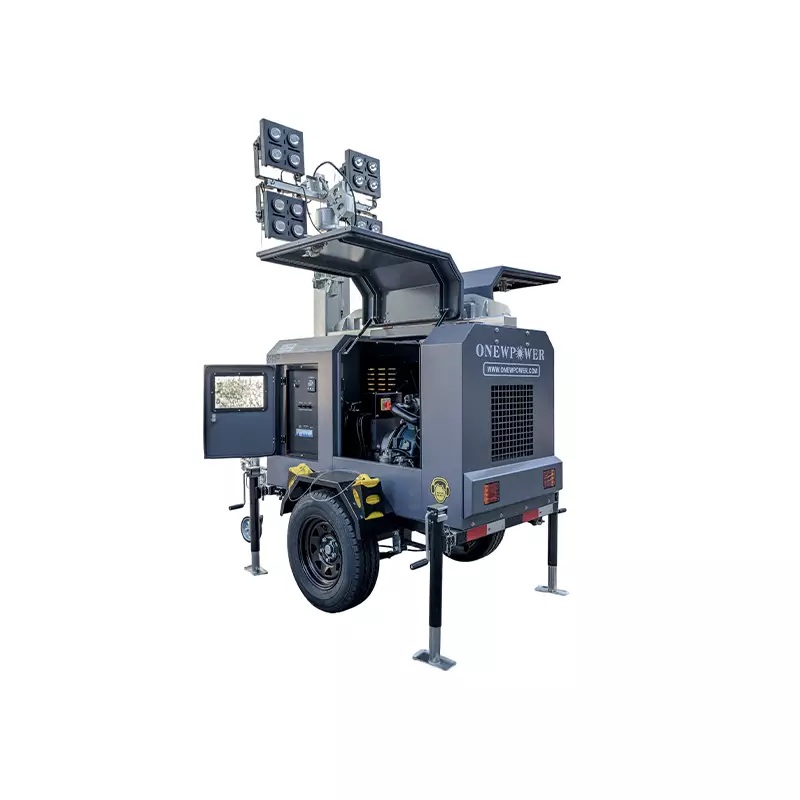
The ONEW ON2400 is a towable diesel light tower designed for outdoor applications such as construction, roadwork, mining, emergency lighting and site security. Its published specification provides useful reference points for buyers who need to plan lighting coverage, fuel capacity and routine maintenance.
| ON2400 specification | Published data |
|---|---|
| Lighting | 4 × 600W LED lamps |
| Published luminous output | 360,000 lm |
| Illuminating area | More than 3,000 m² |
| Lamp protection rating | IP65 |
| Mast | Hydraulic, 5 sections, maximum height 8 m |
| Engine | Kubota Z482, 2 cylinders, 479cc |
| Fuel tank | 80 L |
| Lighting-only operating time | More than 60 hours |
| Alternator | ONS132B, brushless; 4 kW rated output |
The IP65 rating listed for the ON2400 lamps indicates dust protection and resistance to water jets under the relevant test conditions. It does not mean the engine, generator, control system and every electrical connection share the same protection rating. Buyers working in very dusty locations should confirm the protection level of the specific components that matter to their site conditions.
View the ONEW ON2400 mobile light tower generator product page for the published configuration and contact ONEW to confirm the latest specification and maintenance documentation for the selected unit.
When selecting a light tower for a dusty worksite, do not look at lamp wattage alone. Ask about the protection rating of the lamps, control panel, alternator and other exposed electrical components. Check how the engine air filter is accessed and whether replacement filters are readily available.
Also consider the mast design, enclosure access, cooling arrangement and availability of service parts. If the unit will be used by a rental company, simple inspection access and clear maintenance instructions can reduce downtime between customers. Share the site conditions with ONEW, including dust type, operating hours, climate and transport requirements, so the proposed configuration can be reviewed properly.
How often should a light tower be cleaned in a dusty environment?
Check visible surfaces, lamp lenses and air openings before each shift. Clean after operation when necessary, and inspect filters and cooling areas more frequently when dust levels are high. Follow the manufacturer's service schedule for detailed maintenance.
Can dust reduce light tower performance?
Yes. Dust on lamp lenses can reduce usable light, while blocked air filters and cooling openings can affect engine operation and reliability.
Is the ONEW ON2400 light tower dustproof?
ONEW lists an IP65 protection rating for the ON2400 LED lighting. Buyers should confirm the protection ratings of other components separately because the lamp rating does not automatically apply to the complete machine.
Can I use high-pressure water to clean a light tower?
Do not direct high-pressure water at electrical parts, connectors, control panels, engine air intakes or other sensitive areas. Use only cleaning methods approved by the manufacturer.
What should I inspect most often on a diesel light tower at a construction site?
Pay particular attention to the engine air filter, radiator and cooling openings, LED lenses, electrical connections, mast sections and trailer components. Inspection frequency should reflect the dust level and operating hours.
What information should I provide when requesting a light tower for a dusty site?
Provide the application, expected operating hours, dust conditions, required lighting coverage, power needs, transport requirements and local climate. Ask the supplier to confirm component protection ratings and recommended service intervals.
Reliable lighting in dusty environments depends on both equipment selection and regular maintenance. Keep filters and cooling areas clear, clean lamp lenses, inspect the mast and electrical parts, and follow the correct engine service schedule. These straightforward steps help site teams identify problems early and reduce avoidable downtime.
ONEW provides mobile light tower generator solutions for construction, roadwork, mining and other outdoor applications. If you are selecting a light tower for a dusty site, share your operating conditions and lighting requirements with ONEW. The team can help you review the available models, component protection details and maintenance requirements before you place an order.
 NO.107 XIYUAN ROAD ,JINAN District,FUZHOU CITY, FUJIAN,CHINA
 E-mail: jina@onewpower.com






Restez connecté
 |
Plan du site
|
Xml
|
blog
|
politique de confidentialité
 Français