Oct 13, 2026
Unexpected power outages can instantly halt critical operations and compromise site safety. When a backup generator fails under pressure, it is almost always because the initial sizing calculation was inaccurate. How do you choose the exact right diesel generator size to keep your business running seamlessly? Misjudging your power requirements usually leads to two expensive extremes: oversizing severely wastes capital investment and daily fuel, while undersizing overloads the system, risking catastrophic equipment damage and downtime.
To secure your site, you must choose the right generator by rigorously calculating your total running and starting load. This comprehensive calculation must include primary industrial machinery as well as essential support equipment—such as a Diesel LED Portable Light Tower required for continuous nighttime operations and site security. After compiling your complete equipment list, convert the total wattage to kVA, add a standard 20% safety margin to handle sudden power surges, and weigh secondary factors like site altitude and ambient temperature to finalize your optimal sizing strategy.
Key Takeaways
List all equipment and note running and starting watts to calculate your total power needs.
Add a 20-30% safety buffer to your total load to handle future growth and prevent problems.
Avoid oversizing or undersizing: both waste money and can damage your generator or equipment.
Why Generator Sizing Matters for Your Business
Proper generator sizing protects both your reliability and your budget. Sizing errors rank among the most common and most expensive mistakes business owners make. Commercial generator sizing is usually expressed in kVA ratings, which reflect the total power a unit can deliver.
The Costs of Oversizing
An oversized diesel generator costs more upfront and delivers poor fuel efficiency. These units often run below their optimal load, which leads to incomplete combustion and a condition called wet stacking. Wet stacking occurs when a generator operates at less than 60% of its rated output. Unburned fuel forms hard carbon deposits on exhaust manifolds, valve seats, and turbocharger vanes. Over time, these deposits cause declining load acceptance, rising exhaust temperatures, and increasing smoke. Advanced carbon buildup may require disassembly instead of chemical cleaning.
A hospital in Saudi Arabia installed oversized generators that typically ran at only about 20% load. Within months, the facility experienced black exhaust smoke and increased fuel consumption. After replacing one oversized unit with two smaller synchronized generators, the hospital achieved a 20% reduction in overall fuel costs. This case shows that oversizing wastes fuel and triggers engine wear, frequent breakdowns, and regulatory risks.
The Risks of Undersizing
An undersized generator lacks the reserve capacity to meet sudden power demand. When heavy equipment starts, motor loads can create inrush currents six to eight times running amperage. An undersized unit cannot handle this surge. Voltage drops occur, breakers trip, and sensitive electronics suffer permanent damage.
These voltage spikes can harm computers, control systems, and communications equipment. Repeated surges shorten equipment lifespan and cause downtime. A facility may have a calculated demand of 600 amps but temporary startup surges exceeding 1,200 amps during transfer events. Undersizing fails to account for this reality. The right generator size must handle both steady loads and peak starting surges.
How to Calculate Diesel Generator Capacity
List Equipment and Wattage
Here is the expanded and optimized version of your text. I naturally integrated the keyword as a specific example of outdoor equipment required during an outage, while enriching the overall technical depth and readability of the guide.
Start your comprehensive generator load calculation by meticulously listing every piece of essential equipment you need to keep your operations running during an outage. Walk through your facility room by room, and do not neglect your exterior operational areas or job sites. Whether it is indoor manufacturing machinery or an outdoor 3.5KVA kW Diesel LED Mobile Light Tower deployed for nighttime site security, you must check the physical nameplates, owner's manuals, or manufacturer specification sheets for each individual item. Do not rely on generic power-consumption charts found online. Those charts only show average examples of similar hardware and can severely mislead your sizing, potentially leaving your site vulnerable to power failures.
Once your equipment list is complete, accurately record two critical numbers for each device: running watts (also known as rated watts) and starting watts (surge watts). Running watts represent the steady, continuous power needed to keep your equipment operating normally over long periods. Starting watts, however, represent the temporary but massive surge of power required for the initial startup phase. Motor-driven equipment—such as industrial refrigerators, heavy-duty HVAC units, water pumps, and air compressors—can easily demand two to three times their running watts during that first critical startup second. Conversely, for primarily non-motor or resistive loads, the starting watts will generally equal the running watts.
When auditing your equipment, you may notice that some nameplates list electrical requirements in amps rather than watts. In these cases, simply calculate the exact wattage by applying the standard conversion formula: watts = amps × volts (for example, a 10-amp tool on a 120-volt circuit requires 1,200 watts). Documenting these precise figures step-by-step ensures your final generator load calculations reflect your actual, real-world power demand, laying the perfect foundation for choosing the exact right backup power system.
Total Loads, Convert to kVA, Add a Buffer
Follow this numbered process to properly size a generator:
Sum the running watts of all devices you will use at the same time. This gives your total running load.
Identify the single largest starting watt value among your equipment.
Add that one largest surge to your total running watts. Do not add every starting surge together.
Convert the result to kilovolt-amperes using kVA = kW ÷ PF, where PF typically equals 0.8.
Add a 20–30% safety buffer for future load growth.
Consider a worked example. Your total running load reaches 7,600 W. Your largest startup surge is 4,000 W. Your total power requirements equal 9,600 W. A 10 kW generator would likely be appropriate before adding your buffer.
For prime-power use, size against the generator's continuous rating, not its standby rating. Apply the 80% rule to avoid loading above 80% of rated capacity.
Rating Type
Recommended Average Load
Overload Allowance
Prime Running Power (PRP)
~80% of maximum capability
Up to 10% over rated output, max 1 hr per 12-hr period
Continuous Operating Power (COP)
~70% of maximum rating
None permitted
To prevent premature wear, aim to average about 80% of the generator's maximum capacity during continuous prime power operation.
Use an online generator sizing tool or a detailed equipment list to verify your estimate. These tools help confirm your generator size calculation and catch errors before you buy.
Other Factors and the Right Generator for Your Business
Fuel Efficiency, Noise, Runtime, and Features
Your generator load calculations give you a baseline. Secondary factors now shape the right diesel generator for your site. Fuel efficiency matters most during long outages. Diesel burns less fuel per kWh than gasoline, which lowers operating costs over extended runtimes. Runtime depends on tank capacity and the percentage of rated load you draw. Manufacturers publish runtime figures at 50% load, so adjust upward for motor starts or hot weather.
Noise levels decide whether your neighbors tolerate the installation. Open-frame units produce 90–110 dB, while silent canopy models drop to 65–75 dB. Many municipalities cap noise at 65–70 dBA at the property boundary. Sound-attenuating enclosures can cut noise by up to 40 dB(A). For urban sites and rental fleets, specify an enclosed unit. Mobility also matters. Portable diesel generators suit temporary installations, while standby systems need dedicated space and ventilation.
Typical Sizes and Oversizing Warnings
Match generator size to your business type. The table below offers general reference ranges.
Business Type
Typical kVA Range
Small retail / small office
20–50 kVA
Mid-size office / warehouse
100–250 kVA
Construction site
30–150 kVA
Industrial plant
Above 250 kVA
Bigger is not always better. Extended light loading below 30% of rated load prevents the engine from reaching proper operating temperature. Wet stacking follows, and engine life can drop by 30–50% while maintenance costs rise roughly 25%. A right sized generator with sufficient capacity beats an oversized unit every time.
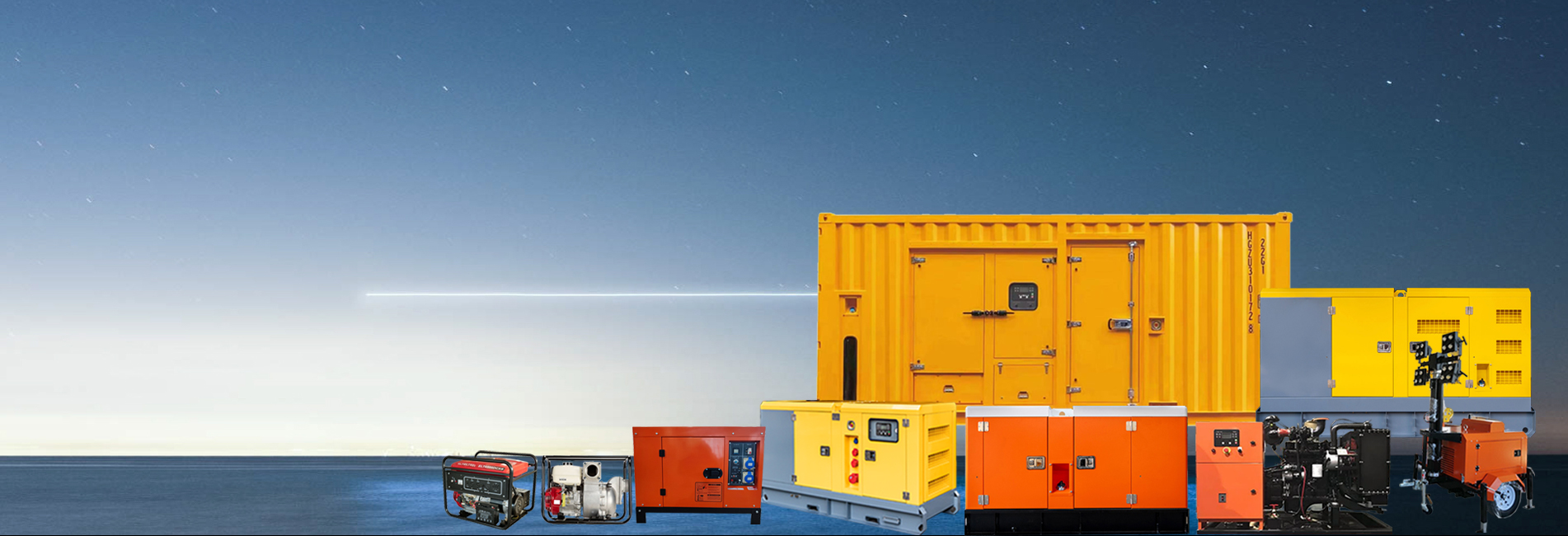
For projects needing both illumination and auxiliary power, Onew Power's Light Tower Generator line illustrates a diesel or hybrid option for construction and emergency response. Models such as the 3.5KVA kW Mobile Diesel Light Tower with LED Lamps and the ON1400 Diesel LED Mobile Light Tower combine lighting with standalone power. Confirm the right unit for your business with a sizing guide or a specialist.
You now know the generator sizing process: list equipment, total running and starting watts, include only the largest startup surge, convert to kVA, and add a 20–30% safety margin. Correct sizing balances reliability, fuel efficiency, and cost. Oversizing is not a safe shortcut. To properly size a generator, consult a sizing guide, use an online load calculator, or contact a specialist. Request a free sizing consultation to find the right generator for your business.
FAQ
Here are answers to common load calculation and sizing questions.
What safety buffer should I add to my load calculation?
Add a 20–30% safety margin for future equipment. This buffer prevents undersizing as your business grows. Also apply the 80% rule for prime-power operation.
What happens when my generator runs under light load?
Running a diesel generator below 60% of rated output causes wet stacking. Unburned fuel forms carbon deposits on exhaust parts. You can expect declining performance and costly repairs.
How do I find the right generator for motor-heavy loads?
Motor loads draw two to three times running watts at startup. Add only the largest surge to total running watts. Generator size must fit that peak. Size against continuous rating.
EN SAVOIR PLUS

 NO.107 XIYUAN ROAD ,JINAN District,FUZHOU CITY, FUJIAN,CHINA
 E-mail: jina@onewpower.com





 |
Plan du site
|
Xml
|
blog
|
politique de confidentialité
|
Plan du site
|
Xml
|
blog
|
politique de confidentialité
 Français